In 1860, the discovery of gold and silver about eighty miles southeast of
Virginia City led to the creation of the boomtown Aurora. E. R. Hicks, J. M.
Corey, and James Braley made the find while on a hunting and prospecting
expedition.
On August 30, 1860, they established the Esmeralda Mining District. A town
site quickly emerged, and was later named Aurora after the Roman goddess
of the dawn. During its short life, Aurora produced $16 million in bullion, was
the subject of a major boundary dispute, and was the execution site of one
of Nevada's more notorious gunfighters.
Hundreds of prospectors poured into the area after the discovery, and within
two weeks, 357 claims were established. Winter did not deter the progress of
the town site, and by February 1861, Aurora supported a quartz mill along
with 150 tents and other structures.
Samuel Clemens, who would later become known as Mark Twain, arrived in
Aurora in 1862, but spent only four months there before leaving for Virginia
City. The town continued to grow after Clemens departed, and reached its
peak in the summer of 1863 with two daily newspapers, two stage lines,
seventeen quartz mills, a telegraph, and almost 800 houses or cabins.
But the ore bodies in the area turned out to be shallow at only one hundred
feet, and in 1864, the town began a decline that never stopped. By 1870, the
population had fallen to 160.
Civil disturbances were common in many nineteenth-century mining camps,
but they were often the result of property disputes, claim jumping, or were
targeted toward social or ethnic groups.
This was not the case in Aurora. The town was a case study in lawlessness,
but it generally occurred between gunfighter and gunfighter, and two unique
factors contributed to the tension that inevitably led to violence.
California accommodated the townspeople by forming Mono County in 1861,
with Aurora as its seat. Later that year, the Nevada Territory was formed, and
Esmeralda County was established with Aurora as its seat.
The town was now the control center of two counties, in two different states.
Political tension remained high until September 1863, when a formal survey
determined that Aurora was in Nevada by over three miles.
Next, Aurora's boom years between 1861 and 1865 coincided exactly with
those of the American Civil War, and feelings about the conflict were
intertwined with the boundary dispute. Republicans, who sided with the
Union, anxiously hoped that Aurora would be found to be in Nevada.
Democrats, who sided with the South, often clashed with Republicans. Verbal
fights between the two sides sometimes turned violent, and in 1862, a
unionist and editor of the Esmeralda Star was shot in the leg by a secessionist.
Newspaper reports and historical records indicate that as many as thirty-one
men were murdered in Aurora during its boom years. Most were deemed
justifiable acts of self-defense.
An exception occurred in 1864, when notorious gunfighter John Daly and his
gang murdered way-station operator William Johnson. Daly was avenging the
killing of his friend, James Sears, who had been killed by one of Johnson's
employees for horse stealing. Johnson was well-liked in the community, and
townspeople quickly organized the "Citizens' Safety Committee" after learning
of the murder.
Rather than try the men in court, the committee declared martial law in
Aurora, and sentenced Daly and three of his men to death. Gallows were
erected, and on February 9, 1864, the vigilantes administered the sentence.
A small amount of mining activity continued in Aurora into the 1870s, with
some speculators holding out hope that running deep shafts would again find
ore. Those efforts would prove futile, and in 1883, Aurora lost its status to
Hawthorne as Esmeralda's county seat.
But Aurora was not dead yet. The rich ore discoveries in Tonopah and
Goldfield inspired J. S. Cain to begin working the claims again in 1905. Miners
and businessmen began returning to Aurora, and by 1906, the post office
reopened. Another town called Mangum was established nearby to
accommodate workers.
The operation changed hands several times before coming under the control
of Aurora Consolidated Mines, which recovered $1,850,000 from the mines
and tailings. The company closed with the advent of World War I, when labor
became scarce.
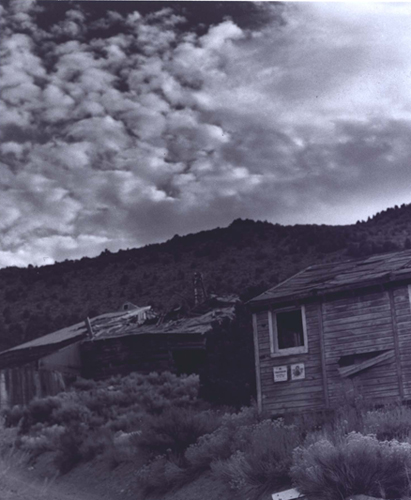
Today, there is little left of Aurora. All the wooden structures were either
removed, reused, or have succumbed to the elements. During the
post-World War II building boom, Aurora's brick buildings were dismantled for
use in home construction in California and Nevada. A few headstones and
building foundations are all that is left of the town.
The Remains of Aurora Today:
Virginia City led to the creation of the boomtown Aurora. E. R. Hicks, J. M.
Corey, and James Braley made the find while on a hunting and prospecting
expedition.
On August 30, 1860, they established the Esmeralda Mining District. A town
site quickly emerged, and was later named Aurora after the Roman goddess
of the dawn. During its short life, Aurora produced $16 million in bullion, was
the subject of a major boundary dispute, and was the execution site of one
of Nevada's more notorious gunfighters.
Hundreds of prospectors poured into the area after the discovery, and within
two weeks, 357 claims were established. Winter did not deter the progress of
the town site, and by February 1861, Aurora supported a quartz mill along
with 150 tents and other structures.
Samuel Clemens, who would later become known as Mark Twain, arrived in
Aurora in 1862, but spent only four months there before leaving for Virginia
City. The town continued to grow after Clemens departed, and reached its
peak in the summer of 1863 with two daily newspapers, two stage lines,
seventeen quartz mills, a telegraph, and almost 800 houses or cabins.
But the ore bodies in the area turned out to be shallow at only one hundred
feet, and in 1864, the town began a decline that never stopped. By 1870, the
population had fallen to 160.
Civil disturbances were common in many nineteenth-century mining camps,
but they were often the result of property disputes, claim jumping, or were
targeted toward social or ethnic groups.
This was not the case in Aurora. The town was a case study in lawlessness,
but it generally occurred between gunfighter and gunfighter, and two unique
factors contributed to the tension that inevitably led to violence.
California accommodated the townspeople by forming Mono County in 1861,
with Aurora as its seat. Later that year, the Nevada Territory was formed, and
Esmeralda County was established with Aurora as its seat.
The town was now the control center of two counties, in two different states.
Political tension remained high until September 1863, when a formal survey
determined that Aurora was in Nevada by over three miles.
Next, Aurora's boom years between 1861 and 1865 coincided exactly with
those of the American Civil War, and feelings about the conflict were
intertwined with the boundary dispute. Republicans, who sided with the
Union, anxiously hoped that Aurora would be found to be in Nevada.
Democrats, who sided with the South, often clashed with Republicans. Verbal
fights between the two sides sometimes turned violent, and in 1862, a
unionist and editor of the Esmeralda Star was shot in the leg by a secessionist.
Newspaper reports and historical records indicate that as many as thirty-one
men were murdered in Aurora during its boom years. Most were deemed
justifiable acts of self-defense.
An exception occurred in 1864, when notorious gunfighter John Daly and his
gang murdered way-station operator William Johnson. Daly was avenging the
killing of his friend, James Sears, who had been killed by one of Johnson's
employees for horse stealing. Johnson was well-liked in the community, and
townspeople quickly organized the "Citizens' Safety Committee" after learning
of the murder.
Rather than try the men in court, the committee declared martial law in
Aurora, and sentenced Daly and three of his men to death. Gallows were
erected, and on February 9, 1864, the vigilantes administered the sentence.
A small amount of mining activity continued in Aurora into the 1870s, with
some speculators holding out hope that running deep shafts would again find
ore. Those efforts would prove futile, and in 1883, Aurora lost its status to
Hawthorne as Esmeralda's county seat.
But Aurora was not dead yet. The rich ore discoveries in Tonopah and
Goldfield inspired J. S. Cain to begin working the claims again in 1905. Miners
and businessmen began returning to Aurora, and by 1906, the post office
reopened. Another town called Mangum was established nearby to
accommodate workers.
The operation changed hands several times before coming under the control
of Aurora Consolidated Mines, which recovered $1,850,000 from the mines
and tailings. The company closed with the advent of World War I, when labor
became scarce.
Today, there is little left of Aurora. All the wooden structures were either
removed, reused, or have succumbed to the elements. During the
post-World War II building boom, Aurora's brick buildings were dismantled for
use in home construction in California and Nevada. A few headstones and
building foundations are all that is left of the town.
The Remains of Aurora Today:
Aurora:
Mark Twain Slept Here
Mark Twain Slept Here
from Online Nevada




WELCOME TO . . .

| AURORA |
 |
| |
 |
| |
 |
| |
 |
| |
 |
| |
 |
| |
 |
| |
 |